Robin Hood
Robin Hood’s Fund for Early Learning (FUEL) invests in programs that promote the “cradle to college to career pipeline” philosophy. The fund supports early childhood development, specifically “the child’s first 1000 days”, through investment in services, education, and access for parents and children.
We were invited by Robin Hood’s Early Childhood Development portfolio to lead a design research program that would bring the voice of the community into FUEL’s funding strategy.
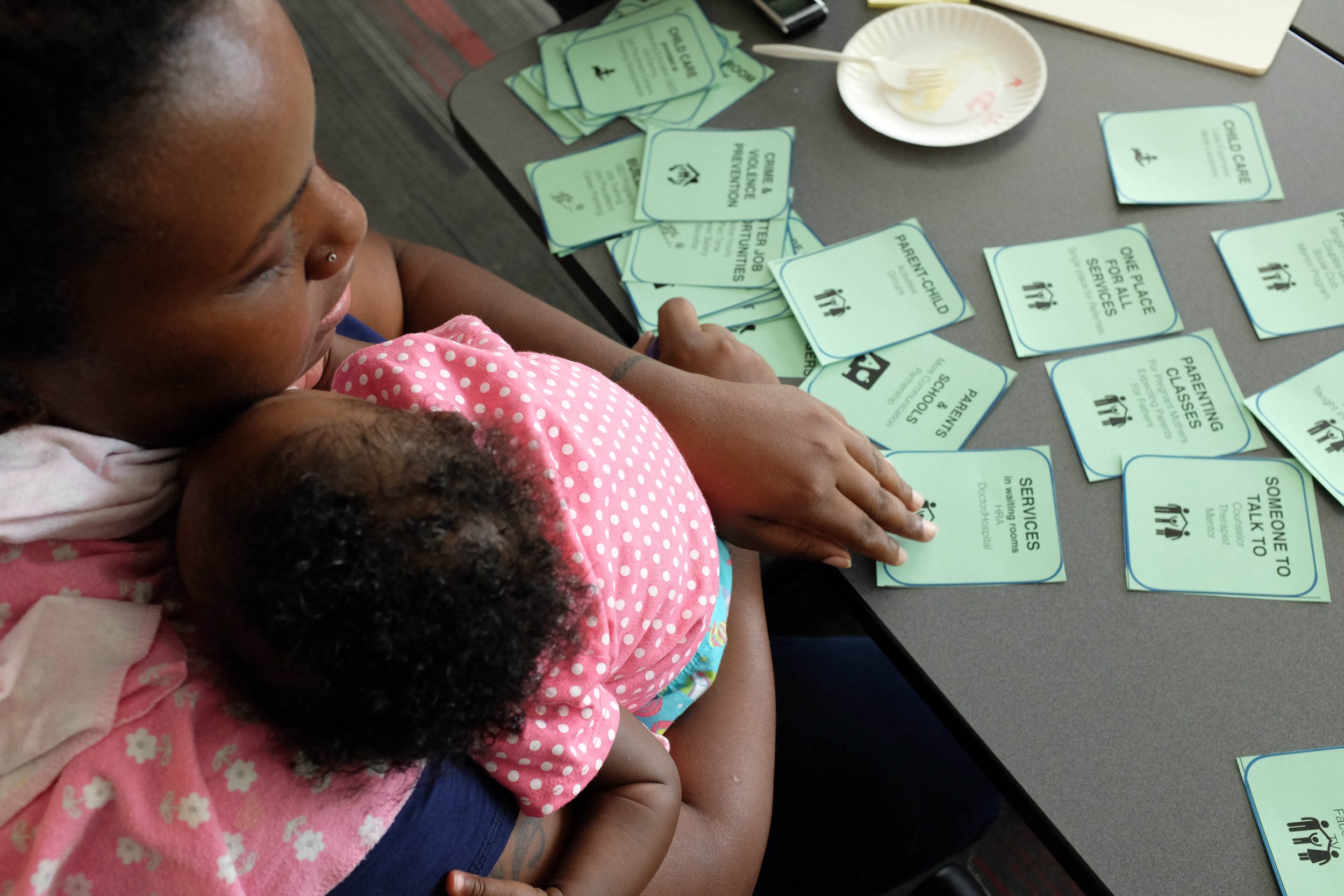
(Card sorting is one of many cognitive research methods we used to identify key areas of attention.)
We partnered with Robin Hood’s grantee organizations in the South Bronx, and Brownsville (Brooklyn), and conducted research workshops, design research interviews, and informal conversations with leaders, staff, clients, parents, grandparents, and independent service providers to ensure that the recommendations we shared with the funders were contextually authentic. We spent time in the community, visiting public places (parks, pools, events) where we’d be able to speak with parents about their experiences.
Taking a “strengths-based approach”, we framed our interactions to focus on parents’ goals for themselves and their children. We discussed how they were using their strengths, and how they might be supported to achieve those goals.
Framing research in this way, empowered participants and encouraged dialogue that would benefit the children by articulating direct needs and systemic barriers. Our methodology inspired participants to generate ideas which pushed boundaries and grounded recommendations in viability.
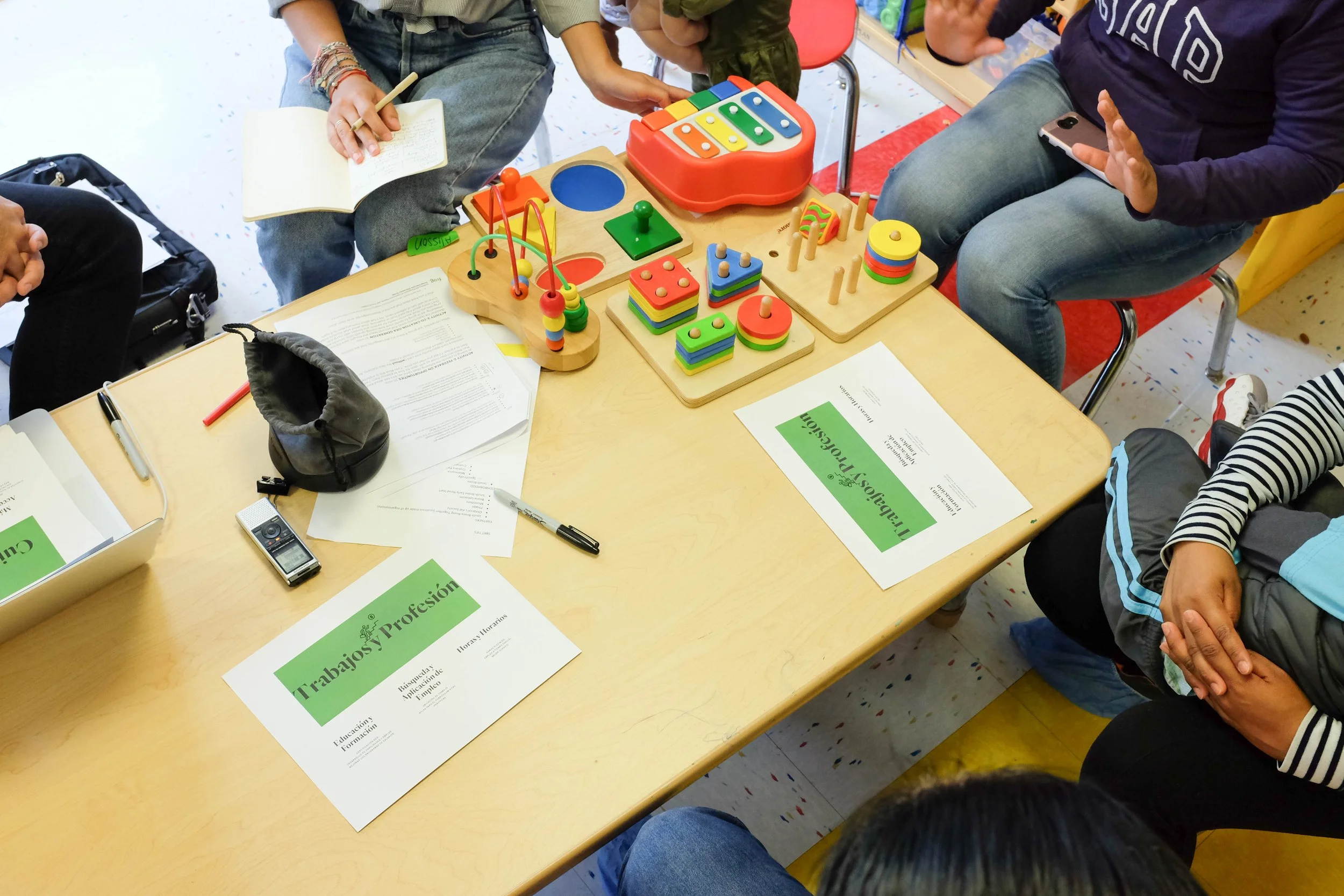
(Group interview activities provide valuable insight by building and leveraging trust through collaborative conversation.)
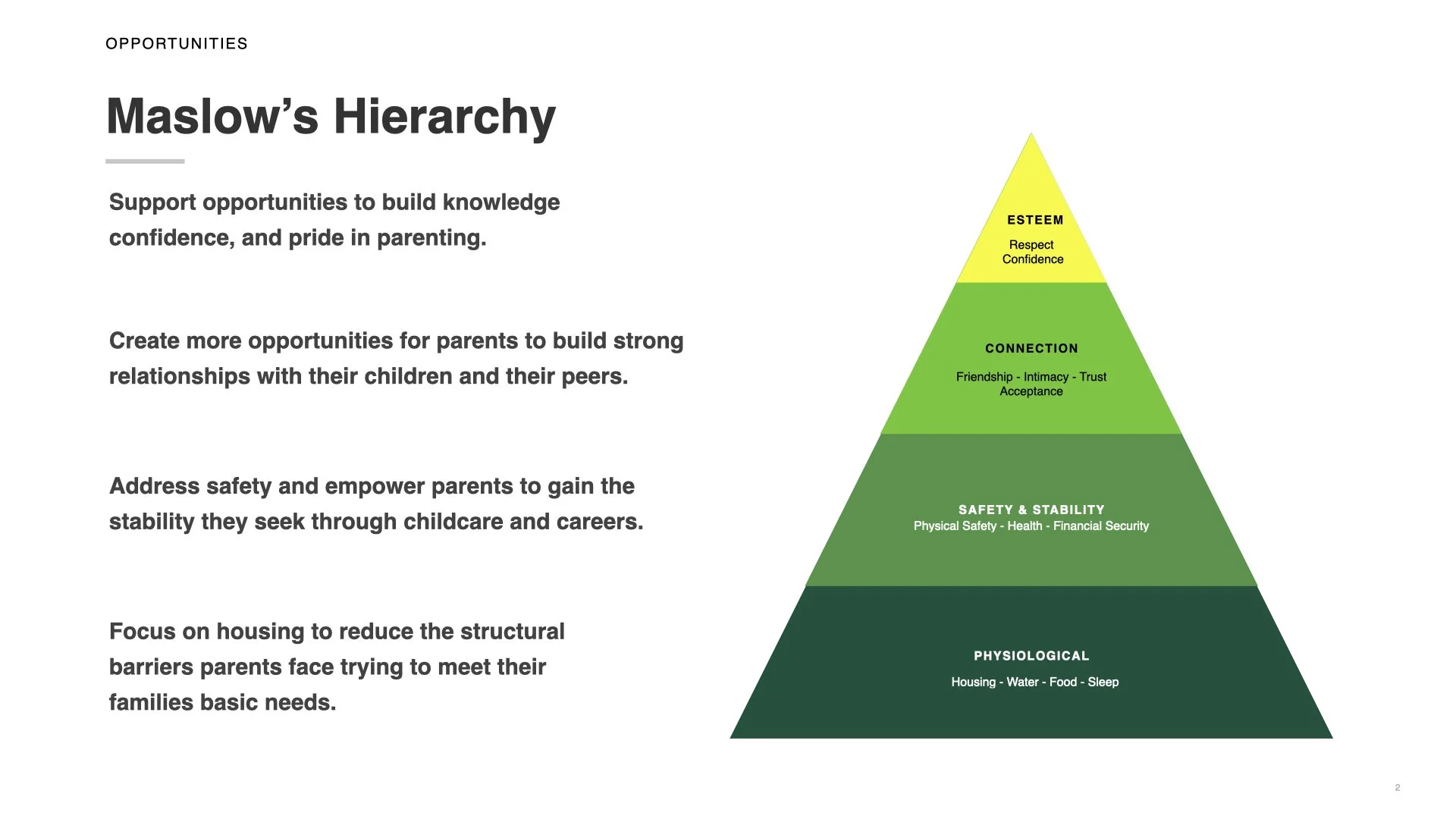
While our recommendations included 100+ ideas distributed across 5 primary opportunity areas, we opened our report with special attention to Community Context, Parents’ Goals, and Parents’ Strength, all centered around this truism:
“Parents’ perspectives shed light on just how challenging it is to isolate early learning from the larger context of poverty. And yet, despite the context they face, parents are determined and resilient.”
Our insights and recommendations preserved continued support for thriving programs, and provided innovative areas of opportunity to scale the impact of the fund. The FUEL commitment has grown from its initial investment of $5 million, to over $50 million.
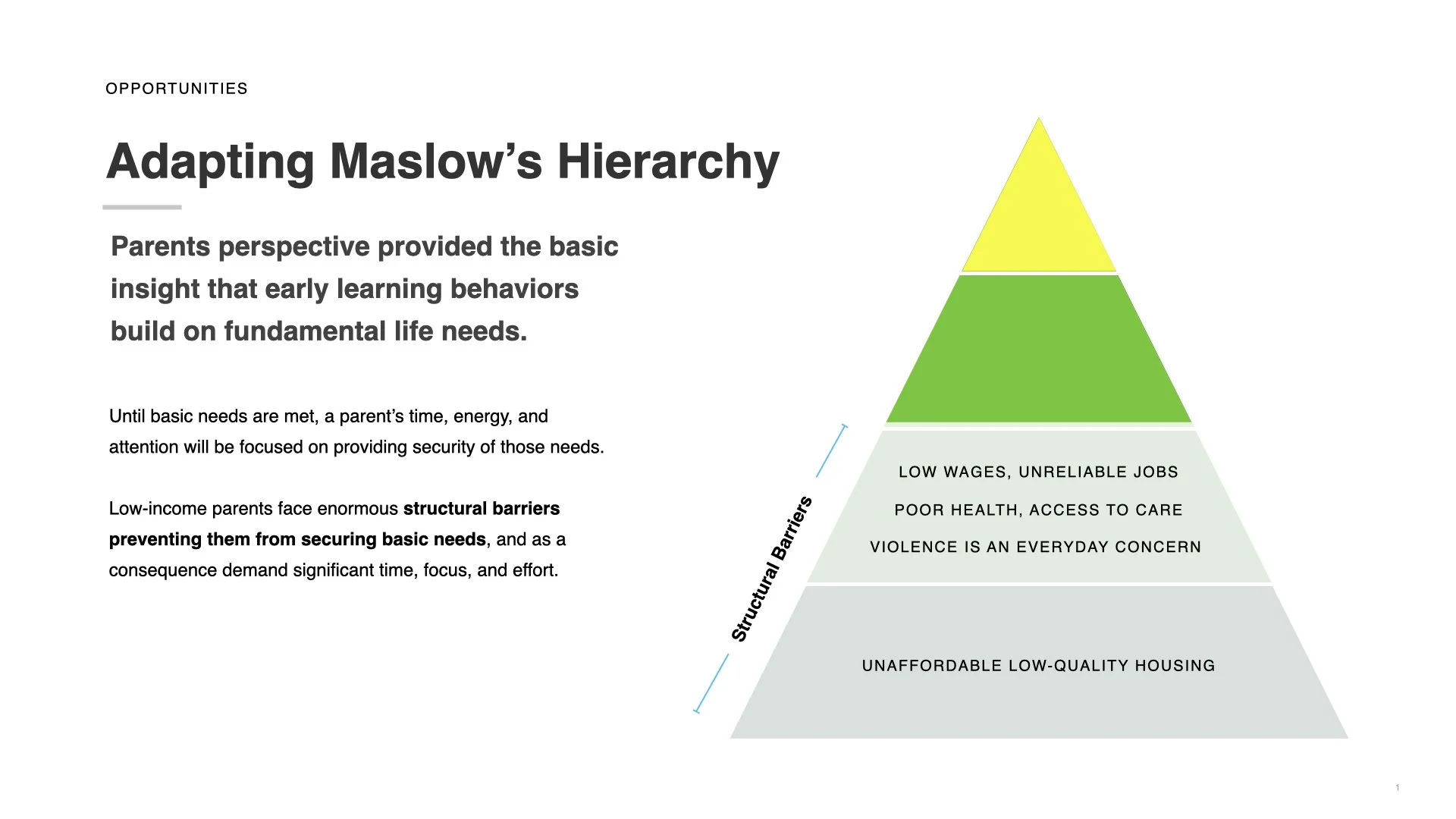
(Mapping parents’ perspectives to the hierarchy of needs, we were able to illustrate our most important point:
Early childhood development is not simply a function of “learning”.)
Collaborators
Lola Bates-Campbell
Jennifer Baranoff
Henry Martes
Richard Tyson
Deborah McCoy
Mackenzie Swirbul
Hannah Calhoon
Bill Cromie
Ollie Gillett
Michelly Garcia
Kassa Belay
Abe Fernandez
Elizabeth Clay Roy
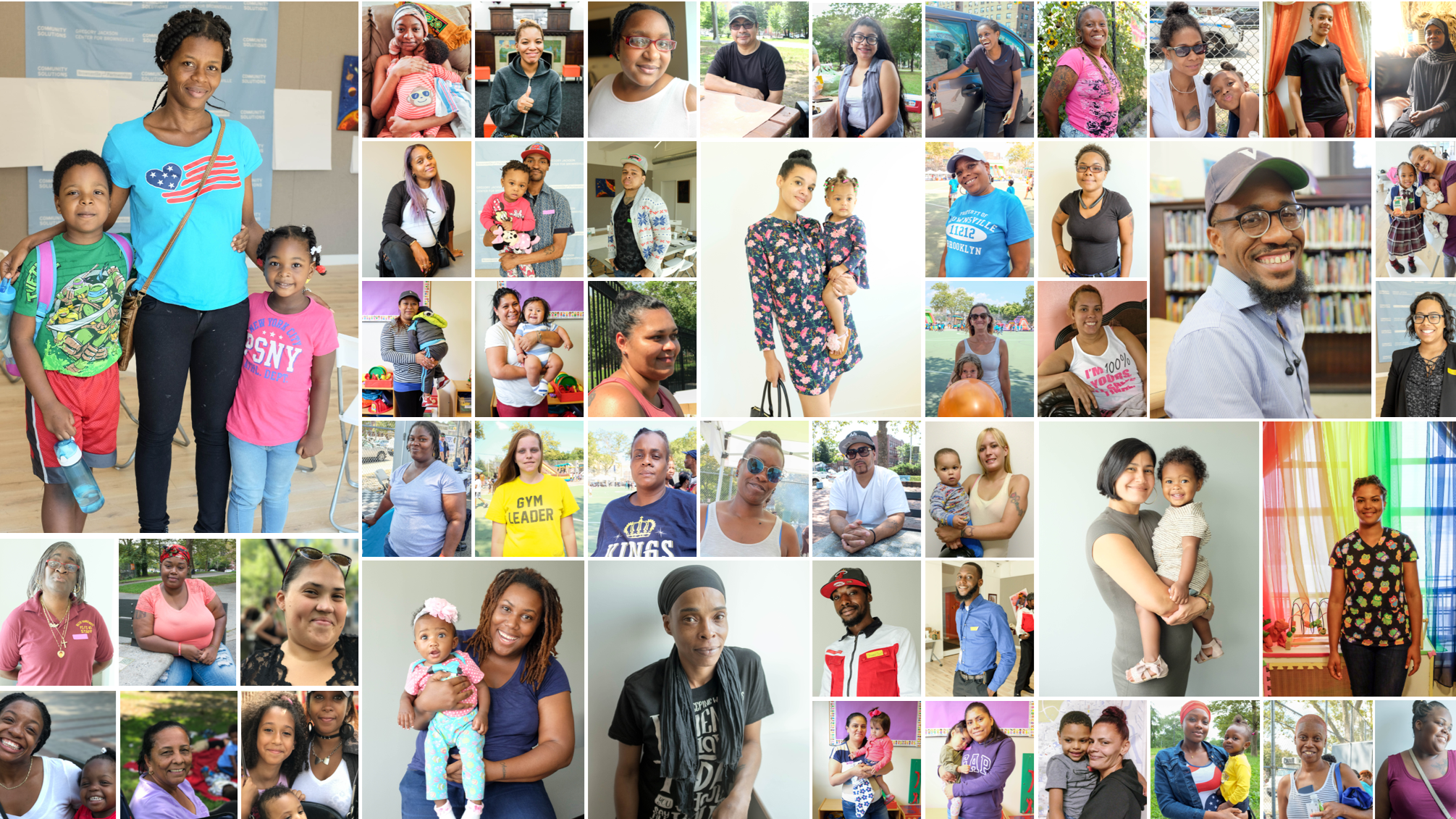
(In addition to candid photos during our research, we created posed portraits of every one of our participants. By taking time out of our flow to project the “self” they wanted to be associated with their voice, people felt empowered, respected, and seen.)
When we talk, remind me to tell you about…
Building community trust
Funder A-ha moments
The most important portraits of my career
Maslov’s Hierarchy of Needs